
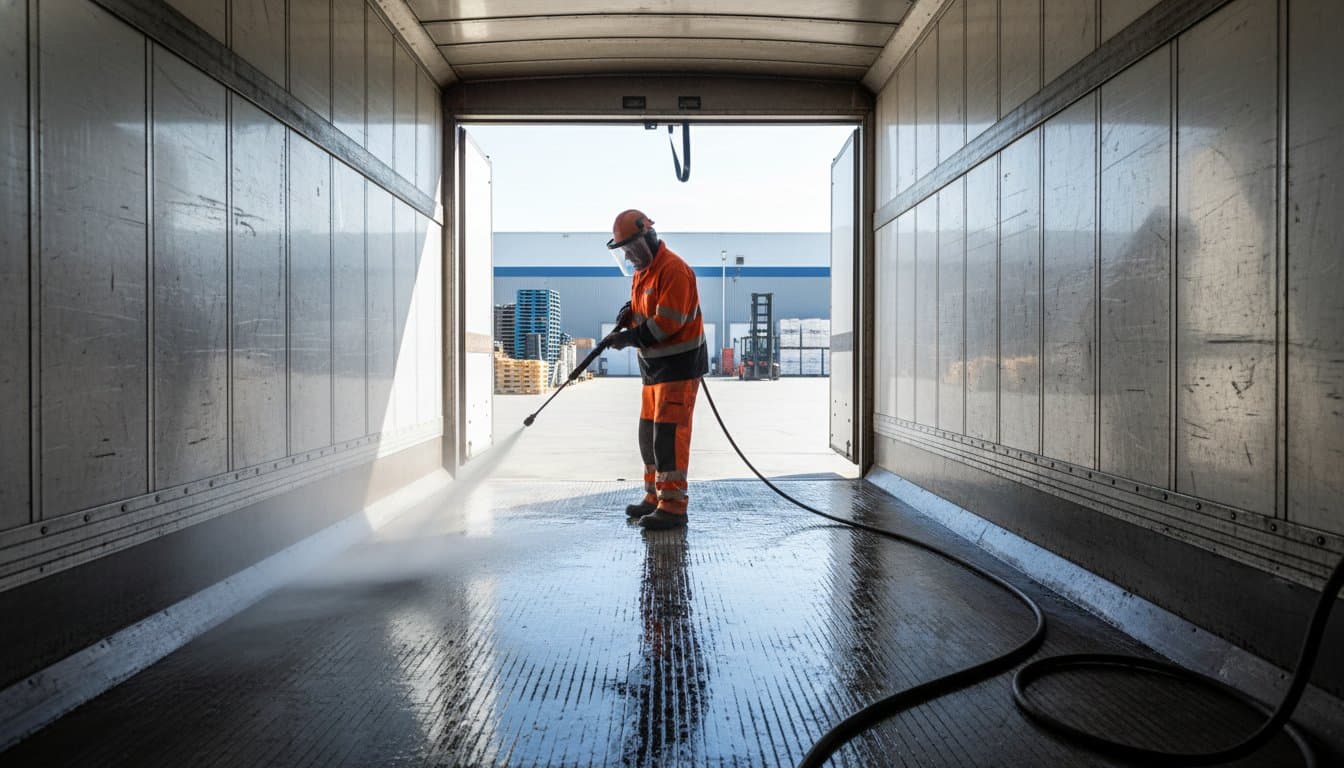
Food Grade Trailer Cleaning: Melbourne Compliance Checklist
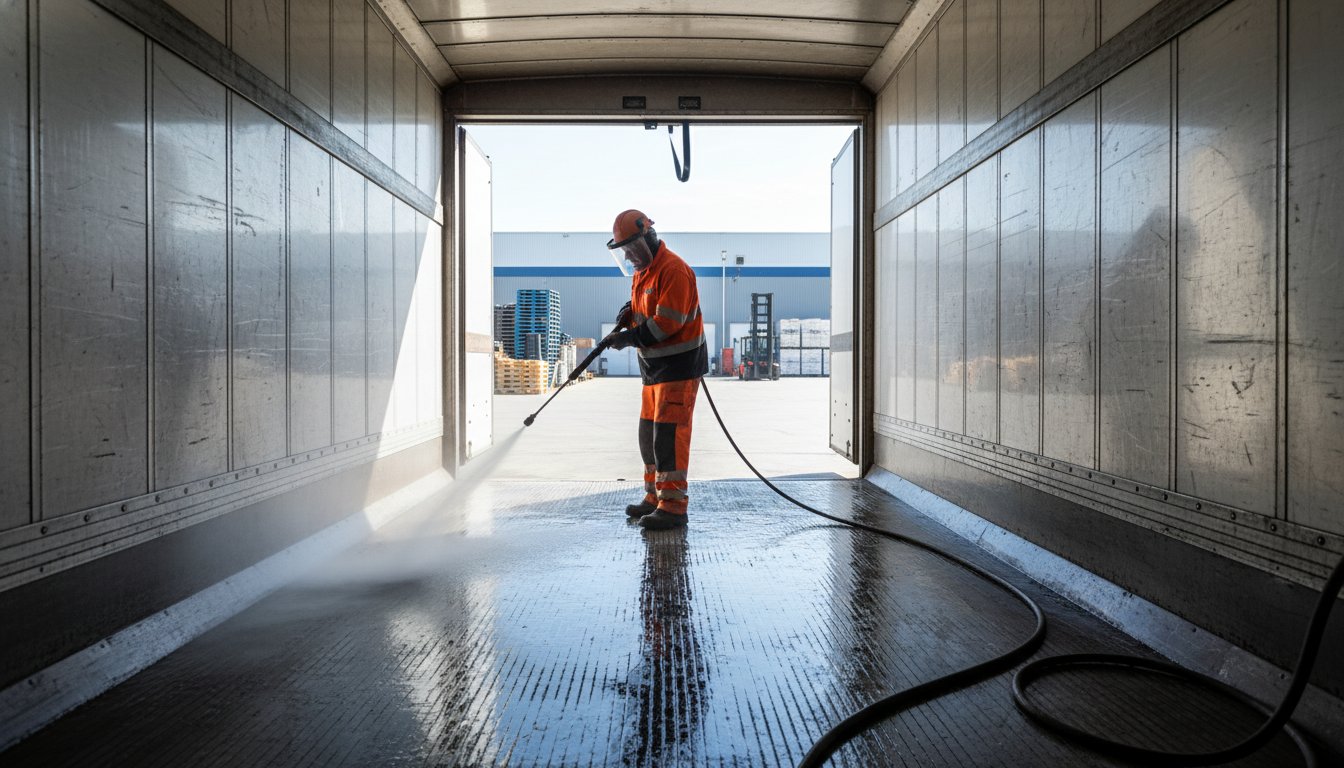
A single rejected load at a Victorian distribution centre can cost your business more in reputation and lost revenue than an entire year of scheduled maintenance. You already know that maintaining impeccable hygiene isn't just about appearances; it's a critical operational requirement. Managing the strict PrimeSafe and FSANZ standards while keeping your fleet on the move often feels like an impossible balancing act. Expert food grade cleaning for refrigerated trailers is the only way to eliminate the risk of cross-contamination and ensure your high-value assets meet every regulatory hurdle.
Mastering these essential sanitation standards gives you the confidence to pass any audit with ease. We'll help you secure zero-risk compliance and reduce vehicle downtime through precise, technical cleaning processes that protect your bottom line. This guide breaks down the Melbourne compliance checklist, from microbial elimination to the documentation required for Victoria's food safety landscape. By integrating professional truck washing services into your routine, you can focus on logistics while we handle the meticulous details of sanitation with quiet confidence.
Key Takeaways
- Understand the specific FSANZ and PrimeSafe Victoria regulations to avoid costly load rejections at Melbourne distribution centres.
- Learn why professional food grade cleaning for refrigerated trailers is essential for deep microbial elimination that visual washing misses.
- Discover the technical advantages of using industrial-grade pressure and food-safe degreasers to maintain complex reefer floors.
- Reduce vehicle downtime and operational friction by shifting from fixed wash bays to efficient, professional mobile cleaning solutions.
- Secure your brand reputation with a consistent maintenance plan that prevents the buildup of permanent odours and cross-contamination risks.
The Critical Role of Food Grade Cleaning for Refrigerated Trailers
A sparkling trailer interior doesn't always mean a safe one. For logistics managers, the gap between looking clean and being compliant represents a massive financial risk. Food grade cleaning for refrigerated trailers is a technical discipline that goes far beyond a simple rinse. It requires the elimination of microscopic pathogens that a standard hose-down leaves behind. When you rely on professional truck washing services, you're investing in a sanitisation process that adheres to rigorous food safety principles.
Microbial biofilms can form on grooved floors and wall panels in as little as 24 hours. These invisible layers protect bacteria from standard detergents, leading to persistent odours and eventual load rejection. In Melbourne, where distribution centres operate with zero-tolerance policies, a single failed inspection can result in thousands of dollars in lost stock and immediate vehicle downtime. You need a cleaning protocol that treats your trailer as a high-value asset, not just a cargo box.
The financial fallout of a rejected load extends far beyond the immediate loss of the cargo. You face the administrative nightmare of insurance claims, the cost of returning the vehicle to a depot, and the potential loss of a preferred carrier status. Professional cleaning mitigates these hidden costs by ensuring every square inch of the cargo space is chemically and physically neutralised. We use industrial-grade equipment to reach the deep recesses of the cooling unit and the intricate grooves of the floor panels, areas where DIY washouts inevitably fail.
Melbourne’s Perishable Goods Landscape
The logistics corridor from the Epping Fruit & Veg Market to the Western Suburbs is the lifeblood of Victoria's food supply. Transporting meat, dairy, and seafood through Melbourne’s volatile climate requires precision. Our city’s sudden temperature shifts can accelerate bacterial growth if moisture is trapped within trailer insulation or floor channels. Effective food grade cleaning for refrigerated trailers must account for these local environmental factors. It ensures that your thermal efficiency remains high and your cargo stays untainted from the first mile to the last.
The Danger of Cross-Contamination
Cross-contamination is a silent profit killer. If your trailer carried raw poultry yesterday and is slated for fresh produce today, the risk is absolute. Porous seals and scuff plates often harbour organic residues that transfer between loads. These hidden pockets of decay ruin shipments and destroy your brand's reputation with major retailers. Meticulous sanitisation is your only defence. We focus on the high-touch zones and drainage systems where pathogens hide, providing you with the documentation needed to prove your fleet meets the highest Victorian standards. Your reputation is built on reliability; don't let an invisible biofilm compromise your success.
Understanding Australian Standards for Trailer Sanitation
Navigating the regulatory maze in Victoria requires more than just a basic checklist; it demands a deep understanding of the legal frameworks that govern our food supply chain. The Refrigerated Warehouse & Transport Association of Australia emphasizes that compliance is a continuous process of verification rather than a one-off event. To achieve true food grade cleaning for refrigerated trailers, your sanitation protocol must align with both national codes and state-specific mandates. Auditors in 2026 are increasingly focused on the technical efficacy of your cleaning agents and the precision of your thermal disinfection processes.
In a professional context, "Food Grade" isn't a marketing term. It describes a specific cleaning process using non-toxic, biodegradable chemicals and high-pressure application that leaves zero harmful residues. This ensures that the cargo space is chemically inert and biologically safe for immediate loading. When you employ professional truck washing services, you aren't just rinsing a trailer; you're certifying that the environment is fit for human consumption.
PrimeSafe and Victorian Regulations
For those operating within the Melbourne metropolitan area, PrimeSafe is the ultimate authority for meat, poultry, and seafood transport. They mandate that any vehicle used for these high-risk goods must be maintained in a "clean and sanitary condition" at all times. This isn't open to interpretation. You must provide documented evidence of regular, professional decontamination. We help you maintain audit-ready records by providing detailed wash certificates after every service. This digital paper trail is your best defense during unannounced inspections at distribution centers or roadside checks.
FSANZ Compliance Framework
On a national level, the FSANZ Food Standards Code, specifically Standard 3.2.2, sets the baseline for transport vehicle cleanliness. It requires that vehicles are designed and maintained to prevent the entry of pests and environmental contaminants like dust, fumes, or smoke. Food-grade sanitation is formally defined as the systematic application of heat or chemicals to a surface so that the number of microorganisms is reduced to a level that does not compromise food safety. This standard ensures that previous cargo residues don't become a breeding ground for future contamination. Keeping your records up to date is simpler when you partner with experts who understand Victorian compliance by calling 042 669 7766.
DIY Wash vs. Professional Mobile Cleaning: A Risk Analysis
Relying on drivers for "quick" washouts is a gamble that rarely pays off in the high-stakes world of Victorian logistics. While a garden hose might remove visible debris, it does nothing to address the invisible microbial layers that auditors scrutinize. Achieving true food grade cleaning for refrigerated trailers requires industrial precision that domestic tools simply cannot match. You aren't just cleaning a floor; you're sanitizing a controlled environment where even a minor oversight leads to load rejection. Professional intervention ensures that your fleet remains a high-value asset rather than a liability.
Corrosive food residues and acidic spills can etch into aluminum floor panels if they aren't properly neutralized. Over time, this degradation compromises the structural integrity of your trailer and lowers its resale value. Our technical approach focuses on long-term preservation as much as immediate hygiene. By employing professional truck washing services, you're choosing a path of technical excellence that protects your equipment from the inside out.
Equipment and Chemical Efficacy
Standard detergents often fail to penetrate the complex biofilms found in meat and dairy transport. You need specialized, food-safe degreasers that are specifically formulated to break down organic proteins without leaving toxic residues. We use advanced heated water systems because cold water merely spreads animal fats around instead of dissolving them. Industrial-grade pressure is the only reliable method for reaching the bottom of T-rail floors where debris becomes trapped. This level of deep cleaning is essential to meet the Australian standards for trailer sanitation and maintain a sterile cargo space.
Downtime and Operational Efficiency
Every minute your driver spends traveling to a fixed wash bay is a minute of lost productivity. When you calculate the true cost of fuel, wages, and vehicle wear, the "cheap" DIY option quickly becomes a significant expense. Mobile on-site cleaning eliminates these friction points entirely. We bring our technical expertise directly to your Melbourne depot, allowing your team to stay focused on scheduling and delivery. This model minimizes congestion at your loading docks and ensures your vehicles are ready for the next shift without unnecessary delays. It's a seamless, bespoke partnership that values your time as much as the quality of the output.
Environmental responsibility is another critical factor for modern Melbourne businesses. Managing wastewater runoff at your own depot can be a legal minefield without the right infrastructure. We handle the technical side of containment and disposal, ensuring your operations remain compliant with local EPA guidelines. You get the peace of mind that comes from knowing your fleet is clean, your records are audit-ready, and your environmental footprint is managed by experts.

The Washify Protocol for Food-Grade Trailer Sanitisation
Precision is the hallmark of our technical execution. We treat every trailer as a sterile environment, following a rigorous sequence designed to eliminate pathogens at the molecular level. Food grade cleaning for refrigerated trailers begins with a forensic inspection of the cargo space to identify high-risk zones. We remove all loose debris and organic matter before the heavy-duty sanitisation starts. This preliminary step ensures that our cleaning agents can penetrate directly into the surfaces without being hindered by surface-level waste.
Our team applies high-pressure, food-grade, non-toxic degreasers that are specifically engineered for the transport industry. These agents break down complex proteins and fats that standard soaps leave behind. We pay meticulous attention to the refrigeration unit covers and the intricate seams where the walls meet the floor. By focusing on these often-overlooked areas, we guarantee a level of hygiene that satisfies the most demanding Melbourne auditors. This technical rigor is what distinguishes a premium service from a basic washout.
Specialised Degreasing Techniques
Removing stubborn oils and biological residues from reefer grooves requires more than just pressure. We apply machinery wash principles to these heavy-duty components, ensuring that every channel is clear of buildup. Our process ensures that no chemical residue remains after the cleaning is complete. This leaves the interior surfaces chemically neutral and ready for immediate contact with food packaging. We use bespoke performance standards to verify that every inch of the trailer meets our internal quality benchmarks before the vehicle is released.
Sanitisation and Drying
The final phase involves a thermal rinse and the application of food-safe sanitising agents. These products are designed to provide a comprehensive microbial kill-rate, eliminating bacteria like Listeria and Salmonella. Proper drainage is a non-negotiable part of our protocol. We ensure that all moisture is removed to prevent the growth of mould or mildew during transit. A final quality check confirms that the trailer is bone-dry and impeccably fresh. To experience this level of precision for your fleet, book your professional fleet cleaning by calling 042 669 7766 today.
Optimising Your Melbourne Fleet with Scheduled Maintenance
Maintaining a pristine fleet requires more than occasional effort; it demands a strategic commitment to regularity. Reactive cleaning usually happens too late, often after a compliance officer flags an issue or a customer complains about a lingering scent. By implementing a recurring schedule, you eliminate the buildup of permanent odours that can seep into trailer insulation. Consistent food grade cleaning for refrigerated trailers ensures that your assets remain in peak condition, extending their operational life and preserving their high-end value.
Your trailers are moving billboards for your brand's commitment to safety and quality. When a clean, well-maintained reefer pulls into a Melbourne distribution centre, it signals professional authority and technical precision to your clients. This visual proof of care builds trust before a single pallet is even unloaded. Integrating these sessions into your broader fleet maintenance cleaning plan allows you to stay ahead of the curve, transforming sanitation from a chore into a competitive advantage.
Booking your next mobile wash shouldn't disrupt your workflow or lead to unnecessary vehicle downtime. We've designed our service to be as frictionless as possible for busy transport professionals. Our team arrives at your location equipped with the latest technology, handling the meticulous details so you can focus on the road ahead. This bespoke partnership approach means we value your time as much as the quality of our output.
Bespoke Fleet Solutions
Every cargo type has unique requirements, from the delicate needs of floral transport to the heavy-duty demands of raw poultry. We tailor our wash frequency to match your specific operational profile, offering volume discounts for larger Melbourne-based transport fleets. You can learn more about our unwavering commitment to Victorian transport standards and how we help local businesses maintain a premium aesthetic that reflects their technical superiority.
Direct Action for Melbourne Operators
Efficiency is the heartbeat of modern logistics. Coordinating on-site cleaning during driver rest periods is the smartest way to keep your fleet audit-ready without losing a single hour of road time. We bring our technical expertise directly to your depot, ensuring your vehicles are roadworthy and compliant at all times. Contact us today at 042 669 7766 to secure your preferred cleaning window and experience the peace of mind that comes from professional food grade cleaning for refrigerated trailers.
Secure Your Fleet’s Compliance and Reputation
Operating a high-performance logistics fleet in Melbourne requires a meticulous approach to sanitation that protects both your cargo and your brand. You've seen how technical precision in food grade cleaning for refrigerated trailers eliminates the invisible risks of cross-contamination and audit failure. By shifting from the high-cost friction of fixed wash bays to our professional on-site services, you ensure your trailers remain in peak condition without disrupting your delivery schedules.
Our industrial-grade degreasing experts treat your assets with extreme care, using eco-friendly and compliant practices that meet every Victorian regulatory standard. We handle the technical details of microbial elimination so you can focus on the growth of your business. Ensure your fleet meets every standard by calling Washify on 042 669 7766 or contact us today for a bespoke quote. We're ready to provide the peace of mind that comes from a perfectly sanitized fleet.
Frequently Asked Questions
What exactly is a "food-grade" truck wash?
A food-grade truck wash is a specialized sanitation process that eliminates microscopic pathogens and organic residues using non-toxic agents. Unlike a standard wash, it focuses on biological neutralisation to meet FSANZ standards. This involves technical precision to ensure no cross-contamination occurs between different cargo types. Our professional truck washing services guarantee that every surface is chemically inert and safe for food transport.
How often should refrigerated trailers be professionally cleaned?
Frequency is dictated by your cargo type and the specific requirements of your distribution partners. High-risk loads like meat or seafood often require food grade cleaning for refrigerated trailers after every single trip to prevent microbial buildup. For general produce, a weekly professional deep clean usually suffices. We recommend integrating this into your fleet maintenance schedule to ensure you always meet Victorian audit standards without fail.
Do you provide wash certificates for PrimeSafe audits in Victoria?
We provide detailed wash certificates and digital records after every service to satisfy PrimeSafe auditors. These documents serve as your official proof of compliance during inspections at Melbourne distribution centres. Having a clear paper trail is vital for maintaining your carrier status and avoiding load rejections. You can call us at 042 669 7766 to discuss setting up an automated reporting system for your entire fleet.
Is mobile pressure washing environmentally compliant in Melbourne?
Our mobile pressure washing systems are fully compliant with Melbourne's environmental regulations and EPA guidelines. We employ advanced containment strategies to manage wastewater runoff effectively at your depot. This ensures your business remains ecologically responsible while maintaining the highest hygiene standards. We take pride in our sustainable practices, allowing you to focus on logistics while we handle the technical side of environmental safety.
Can you clean the exterior and the interior reefer unit simultaneously?
Our technicians can perform comprehensive interior and exterior cleaning simultaneously to maximise your fleet's productivity. We treat the reefer unit covers and the external chassis with the same level of technical rigor as the cargo space. This holistic approach ensures your brand is represented by a polished, professional vehicle that is also biologically safe. It is a seamless service designed to get your trucks back on the road faster.
What chemicals do you use for food-safe sanitisation?
We use high-end, biodegradable sanitising agents and non-toxic degreasers that are specifically formulated for the food transport industry. These chemicals are designed to break down animal fats and proteins without leaving any harmful residues that could taint future shipments. Our commitment to quality means we only use products that are safe for both the environment and human consumption. Every treatment is applied with industrial precision for flawless results.
How much time does a professional food-grade wash take on-site?
A professional food grade cleaning for refrigerated trailers typically takes between 45 and 90 minutes per unit on-site. The exact duration depends on the trailer's current condition and the specific cargo residues being treated. We value your time and work with brisk efficiency to ensure minimal disruption to your operations. Our mobile model eliminates the need for travel to fixed bays, saving you hours of potential downtime.
Do I need to move my trailers to a specific area for the mobile wash?
You don't need to move your vehicles to a specialized facility because we bring our industrial equipment directly to your Melbourne depot. We only require enough space to safely access the trailer's rear and sides with our mobile units. This on-site accessibility is a cornerstone of our service, providing you with the ultimate convenience. Simply contact our team to coordinate a cleaning window that fits your driver's rest periods.